
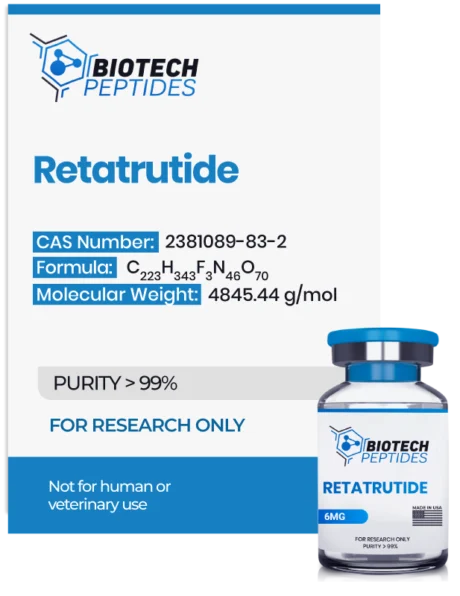
Discover Retatrutide
Retatrutide activates GLP-1, GIP, and glucagon receptors. Therefore, it suppresses appetite, boosts energy burn, and improves insulin sensitivity. Moreover, clinical trials show up to 24% weight loss in 48 weeks.
Users love this retatrutide peptide for its triple-action power. For instance, it outperforms single-agonist options. Consequently, people achieve faster fat loss and better metabolic health.
Master Retatrutide Dosing
Start retatrutide dosing at 2 mg weekly for four weeks. Then, increase to 4 mg, 8 mg, and max 12 mg every four weeks. This gradual approach minimizes discomfort.
Always follow retatrutide dosage guidelines from trials. For example, inject once weekly on the same day. Thus, you build steady levels safely.
Handle Retatrutide Side Effects
Retatrutides side effects mainly hit the gut first. Common ones include nausea, vomiting, diarrhea, and constipation. However, they often fade after weeks.
Stay hydrated and eat small meals to ease symptoms. Additionally, higher doses like 8-12 mg raise heart rate mildly in 20-30% of users. So, monitor your body closely.
Retatrutide FAQs
What exactly is retatrutide?
Retatrutide is a synthetic peptide that acts as a triple agonist for GLP-1, GIP, and glucagon. As a result, it drives major weight loss and blood sugar control.
How do I begin dosing?
Begin with 2 mg weekly. Next, titrate up every four weeks to 4 mg, then 8 mg, up to 12 mg. This method ensures tolerance.
What retatrutide side effects should I expect?
Expect nausea, diarrhea, or bloating most often. Fortunately, these decrease over time, especially with slow increases.
Is retatrutide dosage the same for everyone?
No, adjust based on tolerance. For example, some microdose by splitting weekly amounts. Always consult a doctor first.
Where can I buy retatrutide peptide?
Retatrutide edges out tirzepatide in weight loss potential. Both target obesity through hormone receptors, but retatrutide’s extra mechanism delivers stronger results.
Key Mechanisms
Retatrutide activates GLP-1, GIP, and glucagon receptors. Tirzepatide hits only GLP-1 and GIP. Therefore, retatrutide boosts energy burn more effectively.
Weight Loss Comparison
| Aspect | Retatrutide | Tirzepatide |
|---|---|---|
| Max Weight Loss | Up to 24.2% (48 weeks) | Up to 22.5% (72 weeks) |
| Study Phase | Phase 3 ongoing | FDA-approved |
| Best For | Aggressive fat loss | Proven diabetes control |
Retatrutide shines in shorter trials. Meanwhile, tirzepatide offers real-world data.
Dosing Differences
Retatrutide starts at 2 mg weekly, ramps to 12 mg. Tirzepatide begins at 2.5 mg, maxes at 15 mg. Both use weekly injections, so ease matches closely.
Side Effects Overview
| Side Effect | Retatrutide | Tirzepatide |
|---|---|---|
| Common Issues | Nausea, vomiting, diarrhea | Nausea, diarrhea, constipation |
| Severity | Dose-dependent, mild at low doses | Similar GI focus |
| Dropout Rate | ~7-9% (Phase 2) | ~6-8% |
Side effects fade with time for both. However, consult doctors for heart risks.
Availability Status
Tirzepatide (as Mounjaro/Zepbound) sits FDA-approved now. Retatrutide awaits approval, likely 2027. Thus, tirzepatide accesses easier today.
Retatrutide remains investigational, not FDA-approved yet (expected 2027). Therefore, seek it through research channels or trials only.



Reviews
There are no reviews yet.